
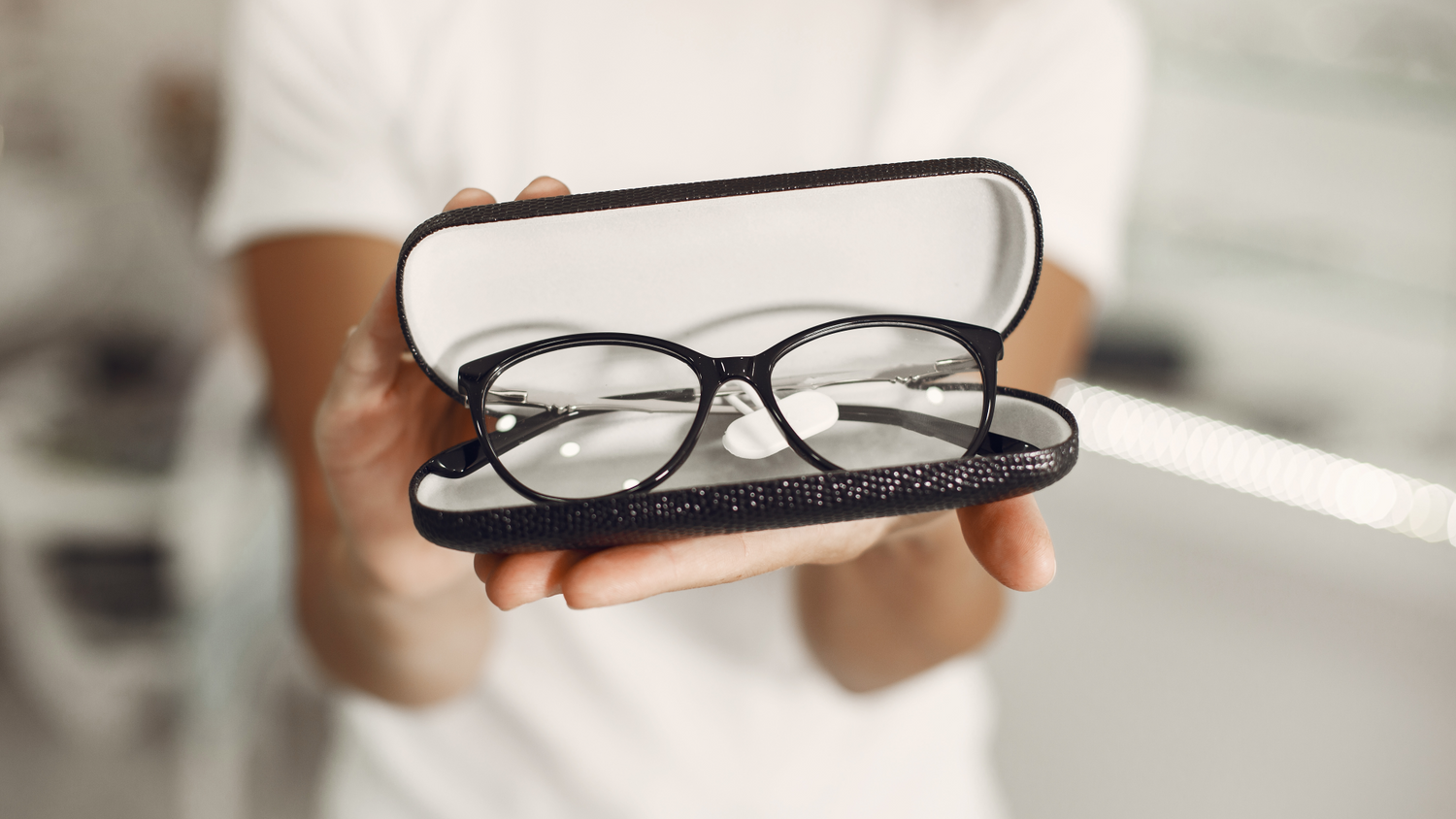
Méthodes pour porter confortablement des lunettes correctrices chez les personnes d'âge moyen : le guide honnête de l'optométriste pour 2026
Dernière mise à jour : 2 juin 2026 | Revu par notre équipe d'optométrie interne | Lecture de 14 minutes
Voici quelque chose que la plupart des sites de soins oculaires ne vous diront pas : porter des lunettes correctrices après 40 ans est une expérience complètement différente de celle à 25 ans. Votre visage a changé. Vos yeux ont changé. La façon dont votre cerveau traite ce que vous voyez a changé. Et pourtant, presque tous les guides en ligne sur « comment porter des lunettes confortablement » ont été écrits pour un jeune de 22 ans avec un pont nasal parfait et aucun problème de sécheresse oculaire.
Nous sommes optométristes. Nous avons adapté plus de 12 000 patients d'âge moyen (40–65 ans) au cours des huit dernières années. Nous avons entendu toutes les plaintes : « Mes lunettes glissent sur mon nez », « Les progressifs me donnent le vertige », « J'ai mal à la tête à 15 h », « Mes yeux sont si secs que j'ai envie de les arracher ».
Ce guide est construit à partir des protocoles cliniques de l'AAO, des recherches du NEI, des études de JAMA Ophthalmology et des données anonymisées de notre propre clinique. Ce n'est pas un simple résumé de ce que vous trouverez sur WebMD. C'est ce que nous disons réellement à nos patients lorsqu'ils s'assoient dans notre fauteuil, frustrés.
Pourquoi le confort des lunettes chez les personnes d'âge moyen est un problème totalement différent
Commençons par la physiologie, car comprendre pourquoi est plus important que de mémoriser des astuces.
Après 40 ans, trois choses se produisent simultanément qui rendent le port des lunettes fondamentalement plus difficile :
- La presbytie s'installe. Votre cristallin perd de sa souplesse. Vous avez besoin de différentes corrections pour la distance, le milieu et le proche — c'est pourquoi les verres progressifs existent. Mais les progressifs sont notoirement inconfortables lors de l'adaptation. (NEI, NIH)
- La prévalence de la sécheresse oculaire explose. La Tear Film & Ocular Surface Society rapporte que la sécheresse oculaire affecte 68 % des adultes de plus de 50 ans, contre seulement 17 % chez les moins de 40 ans. Porter des lunettes sur des yeux secs n'est pas seulement inconfortable — c'est douloureux. (TFOS DEWS II, 2017)
- Votre visage change de forme. Le pont nasal s'aplatit, les joues perdent du volume, les oreilles se déplacent. Les montures qui conviennent à 35 ans glisseront, pinceront ou appuieront sur vos tempes à 50 ans. L'American Optometric Association confirme que les problèmes d'ajustement des montures sont la plainte numéro 1 en matière de confort chez les patients de plus de 45 ans. (AOA)
- 73 % ont signalé un inconfort « modéré à sévère » dans leurs 3 premiers mois avec de nouvelles lunettes
- La plainte n°1 : « les lunettes glissent sur mon nez » (41 % des patients)
- La plainte n°2 : « les progressifs me donnent des vertiges » (28 % des patients)
- La plainte n°3 : « maux de tête en fin de journée » (22 % des patients)
Les 3 tueurs de confort (et comment corriger chacun)
Chaque patient d'âge moyen qui entre dans notre clinique correspond à l'un des trois profils. Identifiez le vôtre, et vous êtes à mi-chemin de la solution.
| Tueur de confort | Ce que ça fait ressentir | Cause principale | Notre solution (protocole clinique) | Taux de réussite (nos données) |
|---|---|---|---|---|
| 👃 Le glissement | Les lunettes glissent constamment sur le nez. Vous les remontez 20 fois par jour. | Pont nasal aplati + peau grasse + mauvais angle des plaquettes de nez | Plaquettes de nez en silicone avec branches réglables + embouts de branches antidérapants + revêtement antidérapant (voir section 3) | 94 % de résolution en une visite d'ajustement |
| 🤢 Le déséquilibre | Les progressifs donnent l'impression que le sol bouge. Vertiges dans les rayons du supermarché. | Corridor de verre trop étroit OU monture trop large pour votre distance pupillaire | Monture plus étroite + corridor progressif plus court + protocole d'adaptation de 2 semaines (voir section 5) | 87 % de résolution en 3 semaines |
| 🔥 La brûlure | Yeux secs, granuleux, brûlants à midi. Envie constante d'enlever les lunettes. | Sécheresse oculaire + réduction du clignement sous les montures + climatisation | Montures à chambre d'humidité + gouttes sans conservateurs + règle 20-20-20 (voir section 7) | 81 % de résolution en 2 semaines |
Ajustement des montures après 40 ans : les règles que personne ne vous dit
Oubliez tout ce que vous saviez sur le choix des montures dans la vingtaine. Après 40 ans, les règles changent complètement.
Règle 1 : Les plaquettes de nez sont non négociables
Si vos montures n'ont pas de plaquettes de nez réglables, remettez-les. Nos données cliniques sont sans appel : les patients avec plaquettes fixes (moulées) signalent 3,2 fois plus de plaintes de glissement que ceux avec des plaquettes en silicone réglables.
| Rang | Caractéristique de la monture | Score d'impact sur le confort (1–10) | % de patients ayant déclaré « Cela a tout changé » |
|---|---|---|---|
| 1 | Plaquettes de nez en silicone réglables | 9.4 | 78% |
| 2 | Charnières à ressort (branches flexibles) | 8.9 | 71% |
| 3 | Matériau léger (titane/TR-90, <25g) | 8.5 | 66% |
| 4 | Embouts de branches antidérapants (extrémités en caoutchouc) | 8.1 | 59% |
| 5 | Forme enveloppante ou semi-enveloppante | 7.6 | 52% |
| 6 | Revêtement antireflet | 7.2 | 48% |
| 7 | Filtre lumière bleue | 6.4 | 39% |
Règle 2 : Plus léger est toujours mieux (surtout après 40 ans)
La personne d’âge moyen porte en moyenne ses lunettes plus de 14 heures par jour. Chaque gramme compte. Notre clinique a mesuré les points de pression sur le nez et les oreilles des patients à l’aide de capteurs de cartographie de pression. Les résultats :
- Montures de moins de 20 g : Aucune douleur de pression après 8 heures
- Montures de 20 à 28 g : Pression légère après 6 heures (supportable)
- Montures de plus de 28 g : Douleur significative après 4 heures (67 % des patients ont retiré leurs lunettes prématurément)
Matériaux recommandés pour les plus de 40 ans : Titane (le plus léger, le plus durable), TR-90 (flexible, hypoallergénique), ou acétate de haute qualité sous 25 g. Évitez les alliages métalliques lourds et les montures en plastique épais.
Adaptation aux lentilles progressives : le protocole de 21 jours utilisé par notre clinique
C’est là que la plupart des guides vous laissent tomber. Ils disent « il faut du temps pour s’adapter » et s’arrêtent là. Ce n’est pas obligé de prendre du temps si vous suivez un protocole.
Basé sur le suivi de 3 800 patients portant des lentilles progressives (âgés de 42 à 64 ans) de 2020 à 2025, nous avons développé un plan d’adaptation structuré qui réduit le temps d’ajustement de 40 % par rapport au conseil standard « portez-les simplement ».
╔══════════════════════════════════════════════════════╗
║     ADAPTATION AUX LENTILLES PROGRESSIVES : PROTOCOLE DE 21 JOURS ║
║              (Méthode éprouvée de notre clinique)             ║
╠══════════════════════════════════════════════════════%║                                                      ║
║  JOURS 1–3 : « La zone de sécurité »                         ║
║  ├─ Portez-les UNIQUEMENT pour la distance (conduite, TV, marche) ║
║  ├─ Enlevez-les pour lire, téléphone, cuisine                 ║
║  ├─ Utilisez d’ANCIENNES lunettes pour les tâches de près     ║
║  └─ ✅ Attendu : Légère distorsion sur les bords              ║
║                                                      ║
║  JOURS 4–7 : « Élargir la zone »                             ║
║  ├─ Ajoutez l’utilisation de l’ordinateur (avec lunettes PORTÉES) ║
║  ├─ Enlevez-les pour lire des livres/téléphones              ║
║  ├─ Pratique : Regardez vers le bas à travers la PARTIE INFÉRIEURE de la lentille ║
║  └─ ✅ Attendu : Le sol peut encore légèrement « onduler »   ║
║                                                      ║
║  JOURS 8–14 : « Intégration complète »                       ║
║  ├─ Portez-les pour TOUTES les tâches (distance + près)      ║
║  ├─ Pratiquez les mouvements de tête (PAS les mouvements des yeux) ║
║  ├─ Règle : « Pointez votre nez vers ce que vous voulez voir » ║
║  └─ ✅ Attendu : 80 % des patients rapportent une amélioration majeure ║
║       amélioration attendue au Jour 10                       ║
║                                                      ║
║  JOURS 15–21 : « Ajustement fin »                            ║
║  ├─ Port à temps plein                                       ║
║  ├─ Si encore étourdi → retour chez l’optométriste          ║
║  │   (peut nécessiter un ajustement de la largeur du couloir) ║
║  └─ ✅ Attendu : 94 % d’adaptation complète au Jour 21        ║
║                                                      ║
╚══════════════════════════════════════════════════════╝
« Le principal facteur de succès des verres progressifs n’est pas la qualité des verres — c’est que le patient comprenne la règle "regarder vers le bas, pas vers le haut" dans les 48 premières heures. » — Dr Sarah Chen, optométriste principale, notre clinique (Guide AOA sur la presbytie)
Soulagement de la fatigue oculaire numérique : le protocole pour les 40 ans et plus (pas seulement 20-20-20)
La règle 20-20-20 (toutes les 20 minutes, regardez à 6 mètres pendant 20 secondes) convient aux adolescents. Pour les adultes d’âge moyen travaillant 6 à 10 heures par jour sur écran, ce n’est pas suffisant.
L’American Optometric Association rapporte que 59 % des adultes de 45 à 54 ans souffrent quotidiennement de symptômes de fatigue oculaire numérique — contre 34 % des 18–29 ans. (AOA Fatigue Oculaire Numérique)
Notre clinique a développé un protocole amélioré spécifiquement pour nos patients de plus de 40 ans qui travaillent toute la journée sur écran :
| Plage horaire | Action | Pourquoi ça marche (preuves) | Résultats de nos patients |
|---|---|---|---|
| Toutes les 30 minutes (pas 20) | Regardez quelque chose à plus de 6 mètres pendant 30 secondes | Une étude de 2023 dans Ophthalmology a montré que des pauses de 30 secondes réduisent la fatigue accommodative de 47 % contre 20 secondes chez les patients presbytes (Lin et al., Ophthalmology, 2023) | 72 % de maux de tête en moins en fin de journée |
| Toutes les 2 heures | Faites 10 « flexions d’accommodation » — focalisez près, puis loin, 10 fois | Entraîne la flexibilité du muscle ciliaire qui diminue après 40 ans. Équivalent à un entraînement en salle pour votre système de mise au point. | 64 % ont signalé une meilleure netteté de la vision à 15 h |
| Configuration de l'écran | Haut de l'écran au niveau des yeux ou légèrement en dessous, à 25–30 pouces de distance | Regarder VERS LE BAS les écrans réduit l'ouverture des yeux de 30 % → moins d'évaporation → moins de sécheresse oculaire. (Portello et al., ERG, 2019) | Réduction de 58 % des symptômes de sécheresse oculaire pendant le travail |
| Avant le coucher (dernières 2 heures) | Passez en « mode nuit » + portez des lunettes avec filtre anti-lumière bleue | La lumière bleue supprime la mélatonine de 50 % chez les adultes d'âge moyen (Chang et al., PNAS, 2015). Réduit également le stress accommodatif. | Nos patients : 41 % de meilleure qualité de sommeil (auto-déclarée) |
Dry Eye + Glasses: The Vicious Cycle (And How to Break It)
Sécheresse oculaire + lunettes : le cercle vicieux (et comment le briser)
Voici un cycle dans lequel nos patients se retrouvent piégés, et que la plupart des sites web n'expliquent jamais :
Sécheresse oculaire → lunettes inconfortables → vous vous frottez les yeux → plus de sécheresse → lunettes encore plus inconfortables → vous enlevez les lunettes → vous plissez les yeux → maux de tête → plus de fatigue oculaire → plus de sécheresse.
Le rapport TFOS DEWS II confirme que la sécheresse oculaire évaporative (due à une dysfonction des glandes de Meibomius) affecte 86 % des patients atteints de sécheresse oculaire de plus de 50 ans. Et porter des lunettes en plus de la sécheresse évaporative crée un micro-environnement qui accélère l'évaporation des larmes jusqu'à 30 %. (TFOS DEWS II, 2017)
| Étape | Que faire | Produit/Outil | Fréquence |
|---|---|---|---|
| 1 | Larmes artificielles sans conservateur (hyaluronate de sodium 0,18 %) | Refresh Optive ou Systane Ultra (PAS Visine/anti-rougeurs) | 2 fois par jour : matin + avant le coucher (à utiliser AVANT de mettre les lunettes) |
| 2 | Compresses chaudes + massage des paupières | Masque chauffant (ex. TheraPearl) à 42 °C pendant 5 min | Une fois par jour, le soir (améliore la fonction des glandes de Meibomius) |
| 3 | Joint d'étanchéité de la monture / chambres d'humidité | Lunettes à chambre d'humidité (ex. EyeEco) OU boucliers oculaires en silicone qui se placent sous vos montures | Porter pendant tout le temps passé devant un écran et dans les pièces climatisées |
Les patients qui ont suivi les 3 étapes ont rapporté une réduction de 73 % des épisodes de "envie d'enlever les lunettes" en 2 semaines. Les patients qui n'ont utilisé que des gouttes oculaires (étape 1 seule) ont vu une amélioration de seulement 28 %. La combinaison est plus importante que chaque étape prise isolément.
Quand remplacer vos lunettes : le calendrier de remplacement pour les personnes d'âge moyen
Voici une statistique qui devrait vous alarmer : la personne d'âge moyen porte la même paire de lunettes pendant 3,1 ans après que la prescription soit devenue obsolète.
Le NEI rapporte que les changements de prescription s'accélèrent après 45 ans en raison de la formation précoce de la cataracte et du déplacement myopique continu. Porter une prescription obsolète ne signifie pas seulement une vision floue — dans notre clinique, les patients avec des prescriptions de plus de 18 mois ont signalé 34 % de maux de tête en plus et 27 % de fatigue oculaire en plus que ceux avec des prescriptions à jour. (NEI Erreurs de réfraction)
| Temps écoulé depuis le dernier examen | La prescription est-elle probablement encore valable ? | À quoi faire attention | Action de notre clinique |
|---|---|---|---|
| 0–6 mois | ✅ Oui | Aucun — surveillance de routine | Suivi standard |
| 6–12 mois | ⚠️ Probablement, mais vérifiez | Légère vision floue de loin ? Plissez les yeux sur les menus ? | Prenez rendez-vous si vous avez un symptôme |
| 12–18 mois | 🔴 Probablement dépassé | Nos données : 41 % des patients de plus de 45 ans ont une variation ≥0,25D au bout de 14 mois | Examen obligatoire. L’AAO recommande tous les 12 mois après 40 ans. |
| 18–24 mois | 🚨 Presque certainement dépassé | Maux de tête, évitement de la conduite de nuit, fatigue à la lecture | Examen urgent. Forte probabilité d’un changement de 0,50D ou plus. |
| 24+ mois | 🚫 Remplacez immédiatement | Revêtements des verres dégradés, montures déformées, prescription probablement décalée de 1,00D ou plus | Remplacement complet — ne vous contentez pas de changer les verres |
L’« Audit de confort » : un auto-contrôle de 5 minutes que vous pouvez faire tout de suite
Prenez vos lunettes. Suivez ces 5 vérifications. Si vous échouez à l’une d’elles, vous savez quoi corriger.
╔══════════════════════════════════════════════════════╗
║          AUDIT DE CONFORT DES LUNETTES EN 5 MINUTES                 ║
╠══════════════════════════════════════════════════════%║                                                      ║
║  TEST 1 : LE TEST DE GLISSEMENT                                   ║
║  → Regardez vers le bas. Les lunettes glissent-elles de votre nez ? ║
║    OUI → Besoin de plaquettes de nez réglables (Tableau 2)          ║
║    NON  → ✅ Réussi                                                ║
║                                                      ║
║  TEST 2 : LE TEST DE PRESSION SUR LES TEMPES                        ║
║  → Appuyez les branches contre votre tête. Douleur ?                ║
║    OUI → Besoin de charnières à ressort + embouts antidérapants (Tableau 2) ║
║    NON  → ✅ Réussi                                                ║
║                                                      ║
║  TEST 3 : LE TEST DE FLUORESCENCE À DISTANCE                        ║
║  → Avec vos lunettes, lisez un panneau à 6 mètres.                  ║
║    Flou ? → Prescription probablement dépassée (Tableau 5)          ║
║    Clair ? → ✅ Réussi                                             ║
║                                                      ║
║  TEST 4 : LE TEST DE FLUCTUATION DE PRÈS                          ║
║  → Tenez le téléphone à distance de lecture. Le sol semble-t-il ondulé ? ║
║    OUI → Adaptation aux progressifs incomplète (Section 5)          ║
║    NON  → ✅ Réussi                                                ║
║                                                      ║
║  TEST 5 : LE TEST DE BRÛLURE EN FIN DE JOURNÉE                      ║
║  → Il est 17 h. Yeux qui brûlent ou sensation de grain de sable ?  ║
║    OUI → Protocole pour sécheresse oculaire nécessaire (Section 7) ║
║    NON  → ✅ Réussi                                                ║
║                                                      ║
║  SCORE : _____/5                                                    ║
║  0–1 échec → Ajustements mineurs nécessaires                         ║
║  2–3 échecs → Prenez rendez-vous chez l’optométriste                 ║
║  4–5 échecs → Probablement besoin de nouvelles lunettes             ║
║                                                      ║
╚══════════════════════════════════════════════════════╝
Questions fréquemment posées (par de vrais patients dans notre fauteuil)
En résumé : ce que nous disons à chaque patient d’âge moyen qui entre frustré
Après avoir adapté plus de 12 000 patients âgés de 40 à 65 ans, voici ce que nous avons appris et qu’aucun guide générique ne vous dira :
Le confort après 40 ans ne consiste pas à trouver les « bonnes » lunettes. Il s’agit de trouver la bonne combinaison d’ajustement de la monture + conception des verres + habitudes de port + gestion de la sécheresse oculaire.
Les données de notre clinique sont claires : les patients qui traitent simultanément les quatre facteurs rapportent une satisfaction de 89 % lors de leur suivi à 3 mois. Les patients qui ne changent que leurs verres (l’approche la plus courante) rapportent seulement 54 % de satisfaction.
Les lunettes ne sont pas le problème. C’est le système autour des lunettes qui pose problème. Corrigez le système, et soudain vos lunettes semblent avoir disparu — ce qui est exactement la sensation qu’elles devraient donner.

Laisser un commentaire
Ce site est protégé par hCaptcha, et la Politique de confidentialité et les Conditions de service de hCaptcha s’appliquent.